
 In Good Flavor
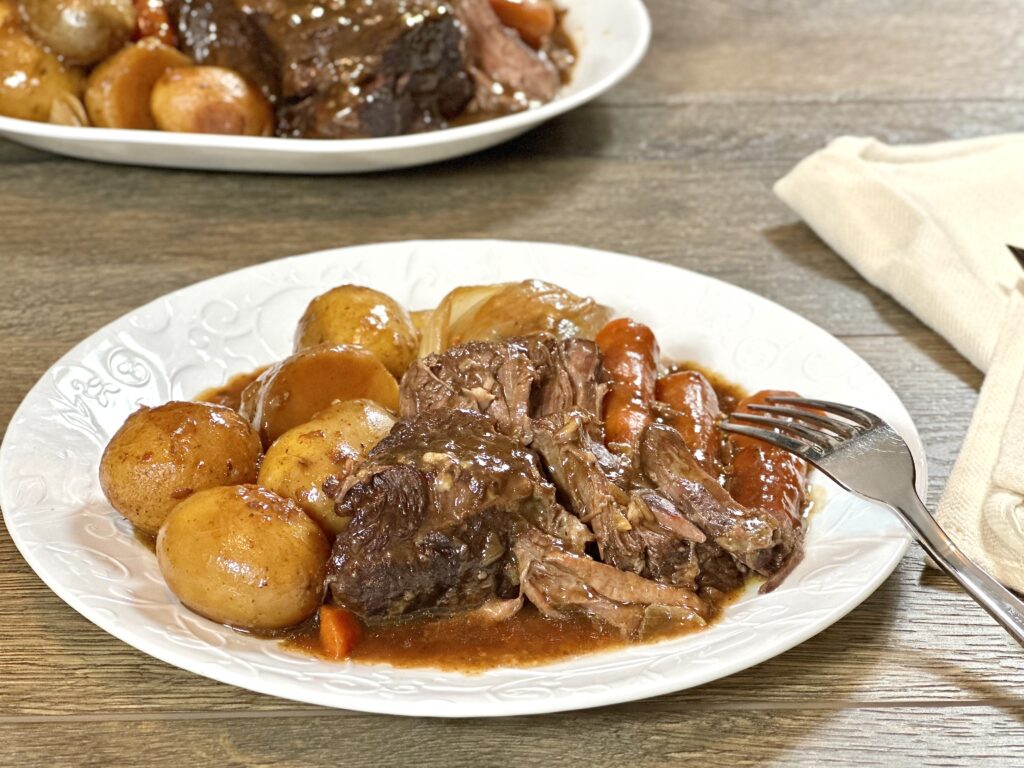
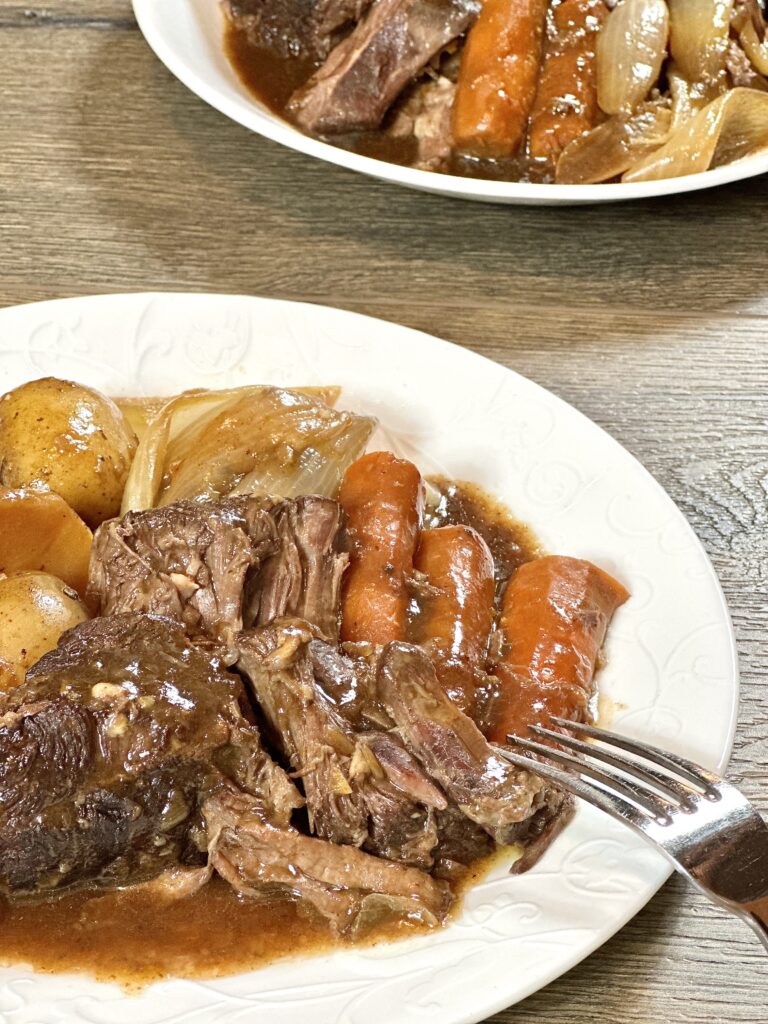
This Slow Cooker Pot Roast transforms tough yet economical chuck roast into a fork-tender, juicy meal. It’s slow-cooked with carrots, onions, and potatoes. Seasoning packets are used to create an easy, most flavorful brown gravy.
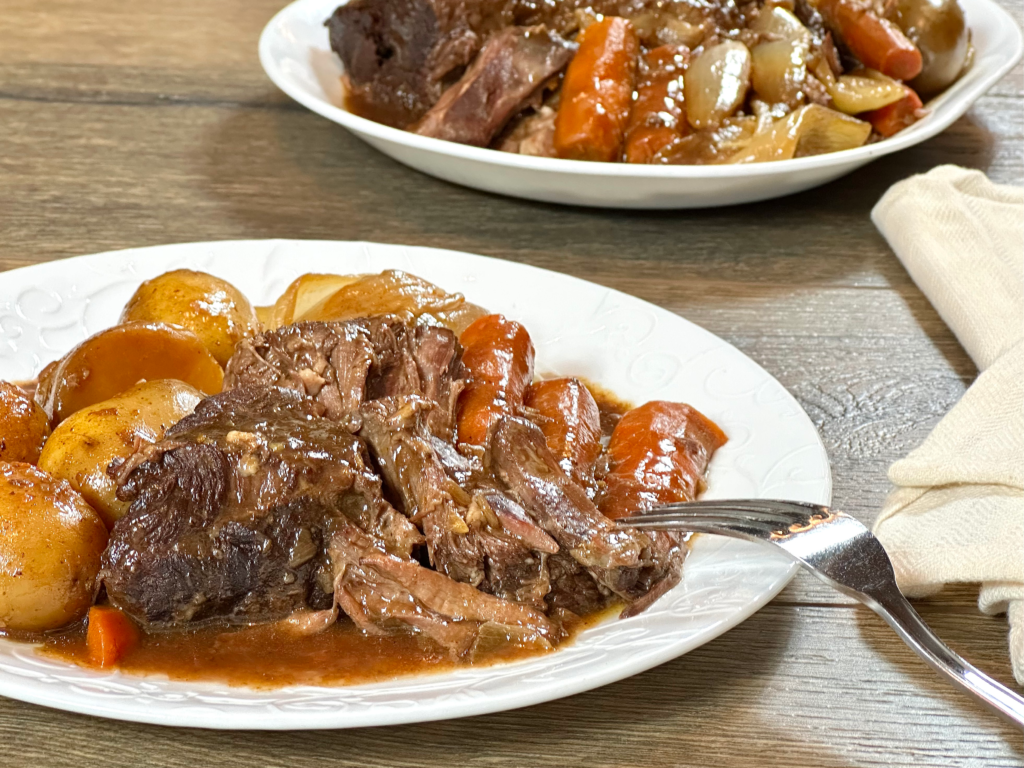
Pot roast is a homey and welcoming meal anyone can make. It’s a kind of meal that brings tremendous comfort, especially in fall and winter, filling your home with incredible aromas as it slowly cooks. The best part? It’s surprisingly easy to make! All you need to do is stick to a few basic rules to have a delicious, mouthwatering pot roast. Using a slow cooker means you can set it and forget it, letting dinner almost cook itself throughout the day. It’s practically a fail-safe method.
This is a complete meal that truly needs nothing else. But you might want biscuits or rolls to sop up all the brown gravy goodness. Of course, you can’t go wrong with mashed potatoes—I like to omit the potatoes in the pot roast and serve the dish with a mashed potato side. Yum!!
Basics of pot roast:
Choose the right cut of meat: Chuck roast is the best option because it’s affordable and well-marbled, with plenty of fat, collagen, and connective tissue. Low-and-slow cooking renders the fat and breaks down the connective tissue, yielding moist, fall-apart meat. Brisket and rump roast are also suitable cuts, but they are leaner. Keep in mind that leaner meat is more prone to drying out.
Cook low and slow: Time and low heat are key to cooking tough cuts of meat. A long, low-heat cook is needed to achieve fork-tender results. In a pinch, you can cook on high, but a low setting is highly recommended. This recipe is for a ballpark 4-pound roast. Cook on a low setting for 8 to 10 hours, or on high for 4 to 6 hours.
Do not open the lid: It lowers the temperature in the pot and slows the cooking process.
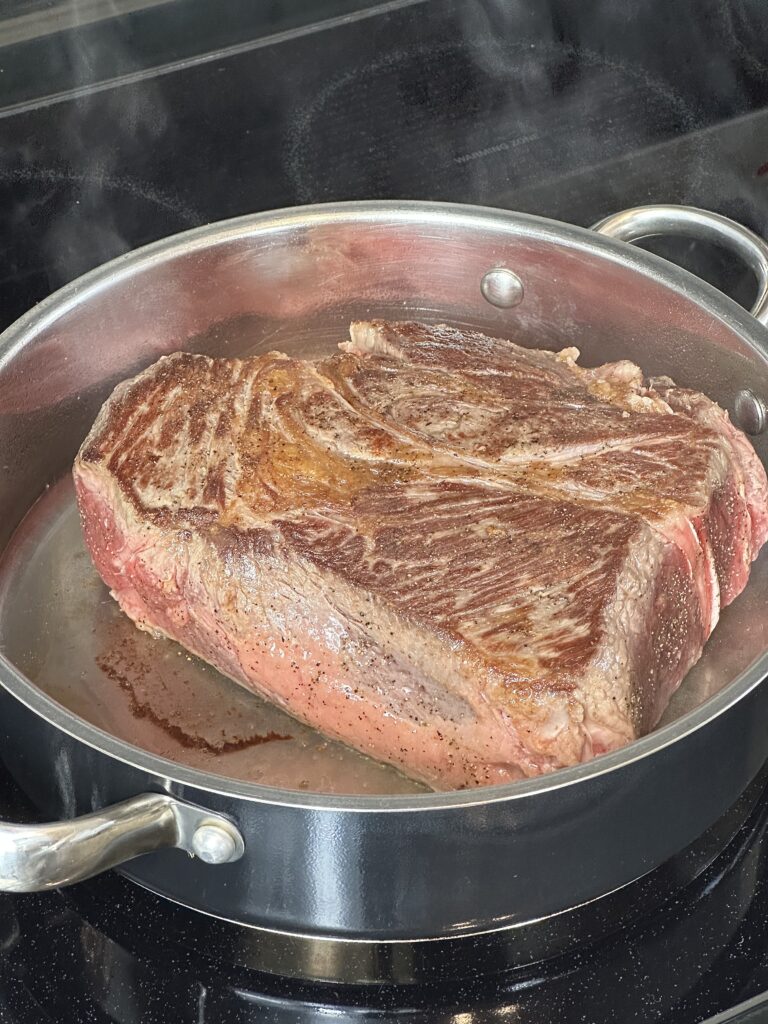
Searing the roast is highly recommended: Do this before placing it in the slow cooker. Searing renders the fat and seals in the juices. The caramelization adds tremendous flavor. If you don’t have time, you can skip the searing. The chuck will still be tender and delicious, but it will have slightly less depth of flavor
Ingredients needed:
- Chuck roast—is excellent for pot roast. Rump roast and brisket are also good choices.
- Vegetables—baby or waxy potatoes, carrots, and onions.
- McCormick Au Jus Gravy—for the gravy flavor base.
- Lipton Onion Recipe Soup & Dip Mix—for the gravy flavor base.
- Bay leaf—infuses aromatic undertone.
- Salt and black pepper—for seasoning the roast and to enhance flavor.
- Garlic—provides flavoring and adds depth of flavor
- Cornstarch—to thicken the gravy.
- Water—for the gravy base and moisture.
Recipe highlights:
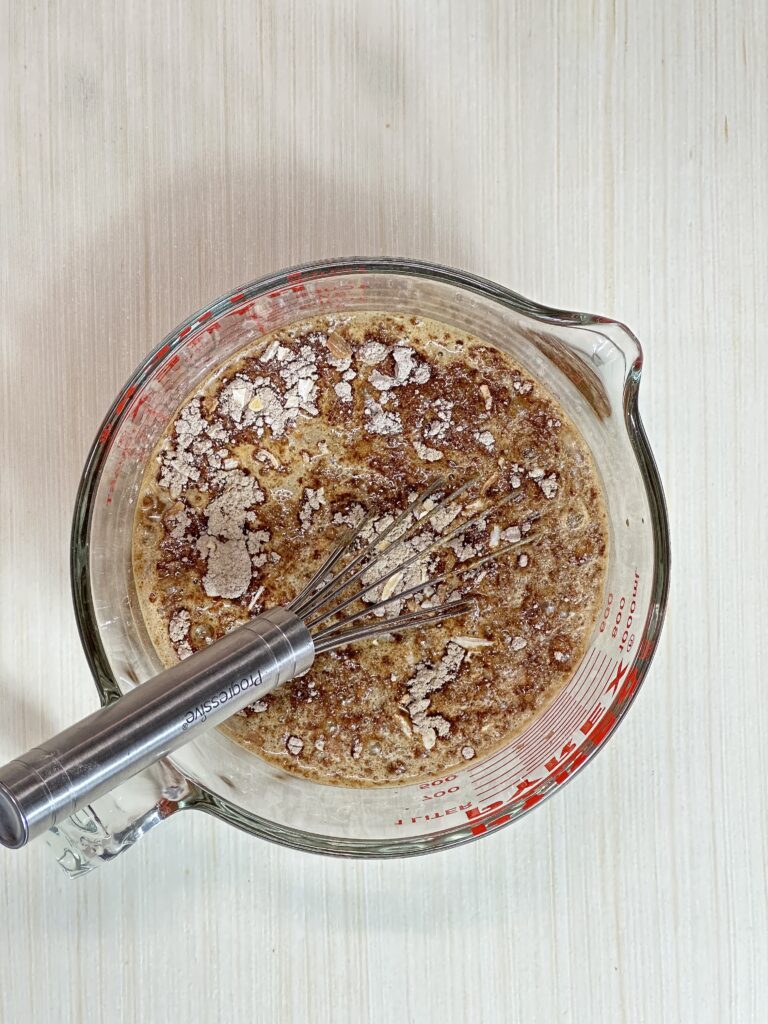
- Combine 2 au jus mixes, 1 1/2 packets of onion soup mix, and chopped garlic with 1 3/4 cups of water to make the gravy base. Whisk. Set aside. Save the remaining half of the onion packet for another use.
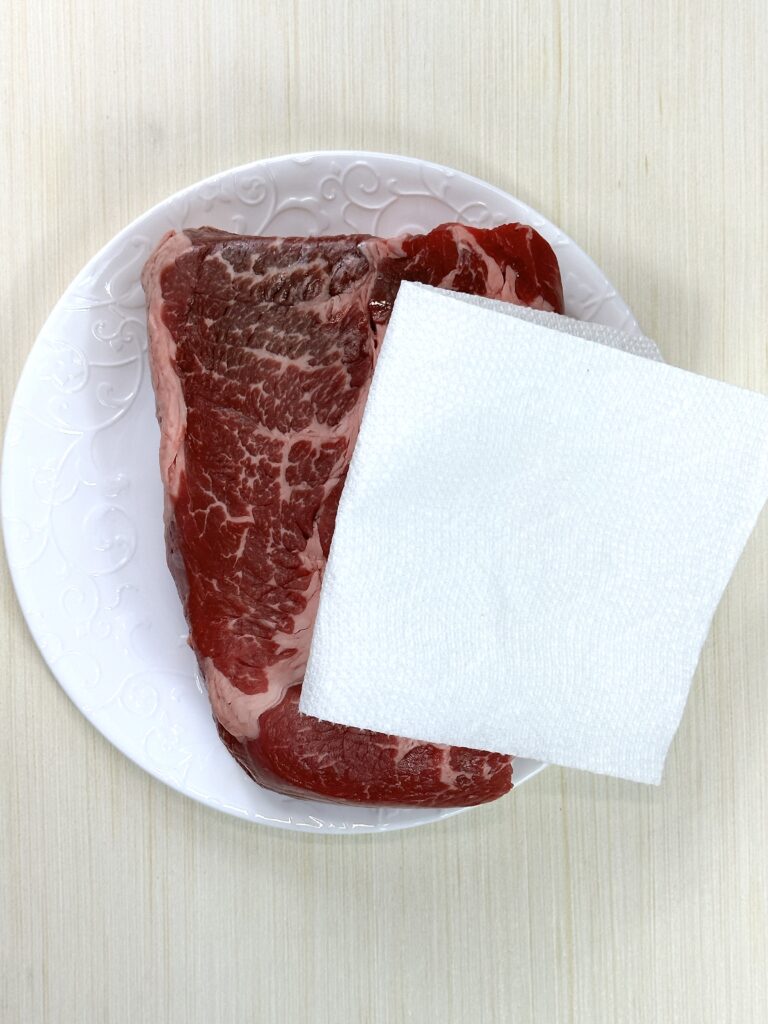
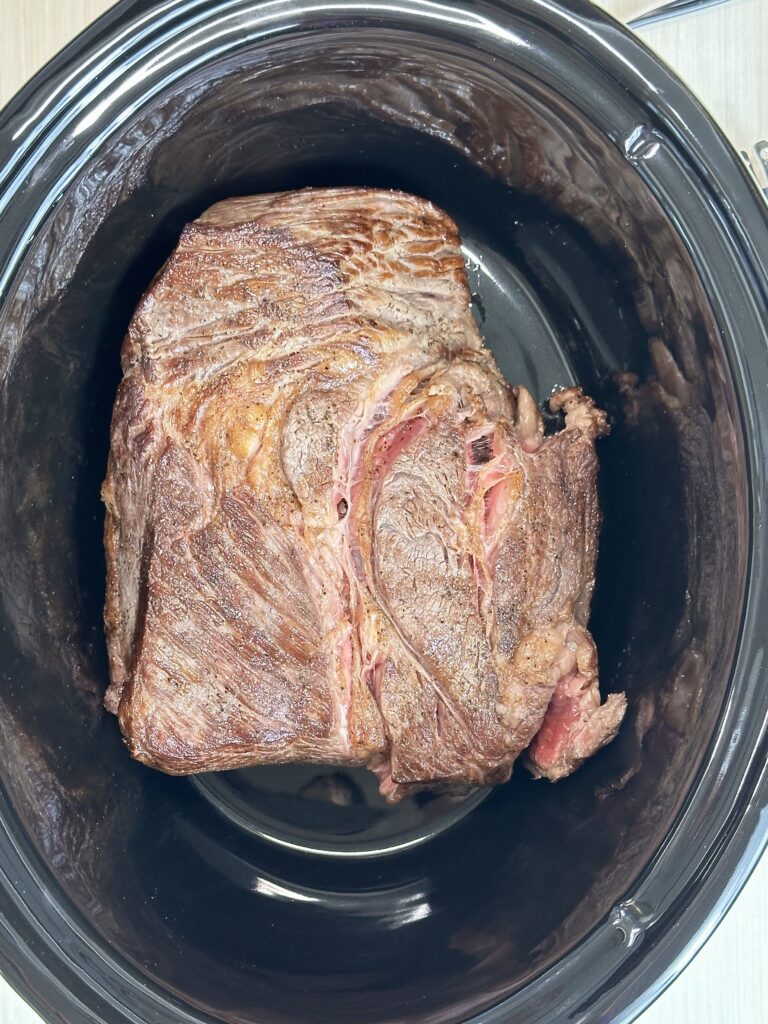
- Season the roast with salt and pepper. Sear on all sides in a preheated large skillet or saute pan on medium-high, about 2-3 minutes per side. Transfer to the slow cooker.
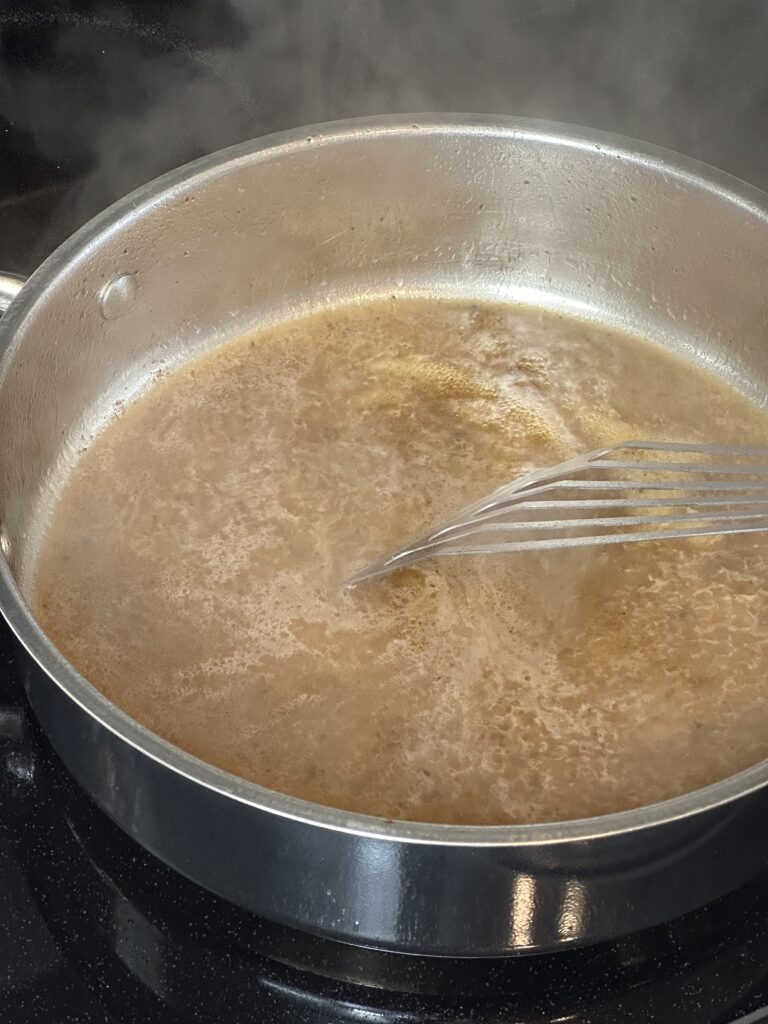
- Reduce skillet heat to medium. Add 1/2 cup of water to deglaze the skillet, scraping the bottom to loosen the brown bits. Pour into the slow cooker.
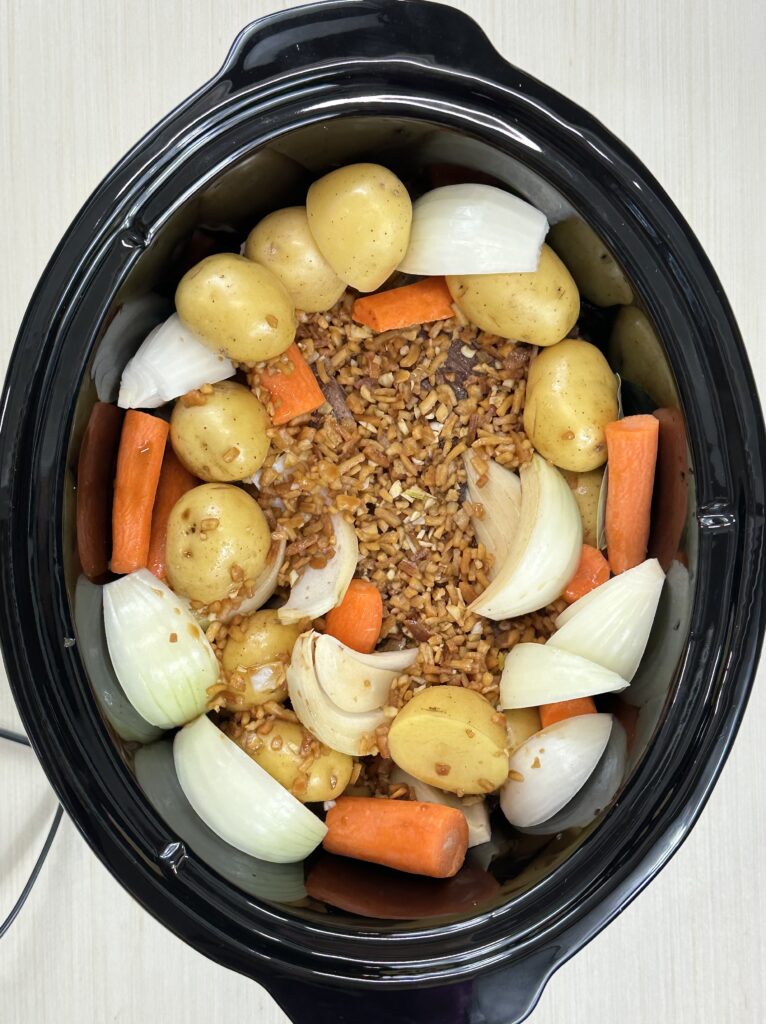
- Place vegetables around the roast. Pour in the gravy base.
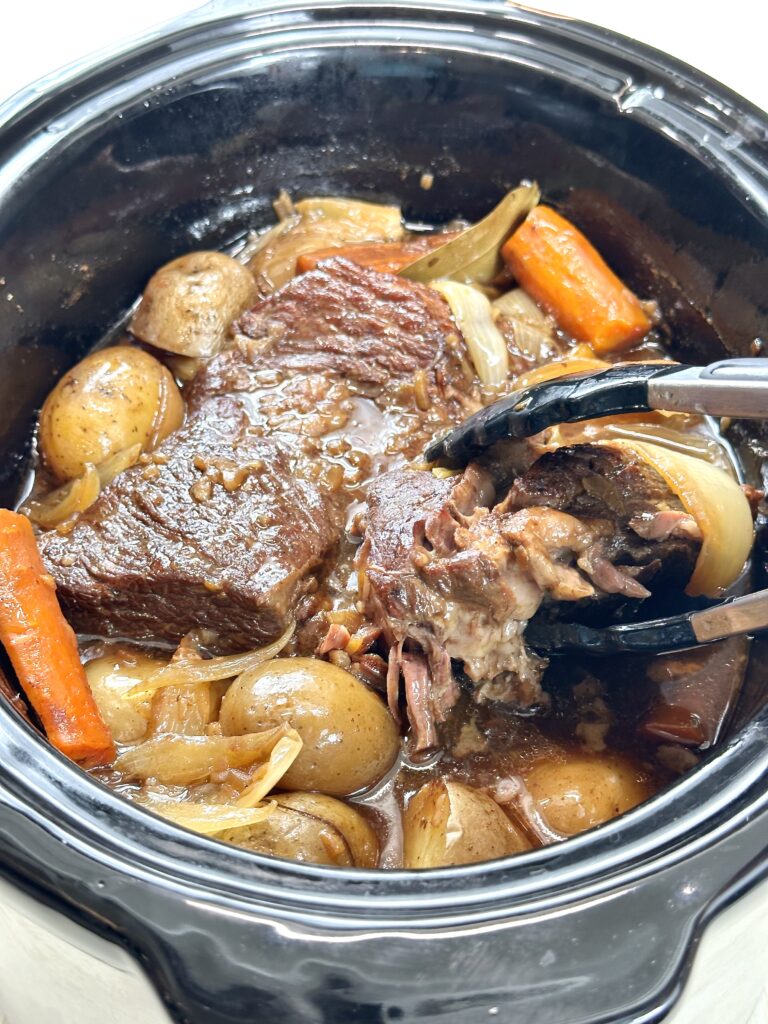
- Cook on low for 8 to 10 hours or high for 4-6 hours. The meat will fall apart tender when done.
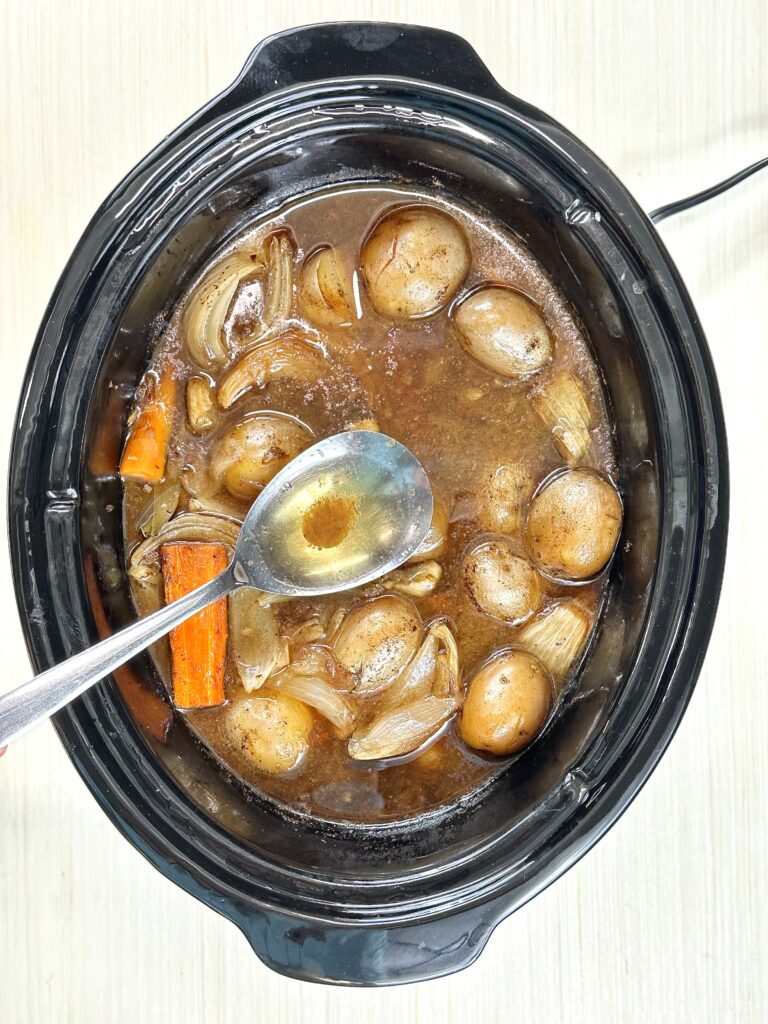
- Skim the fat off the top with a large spoon.
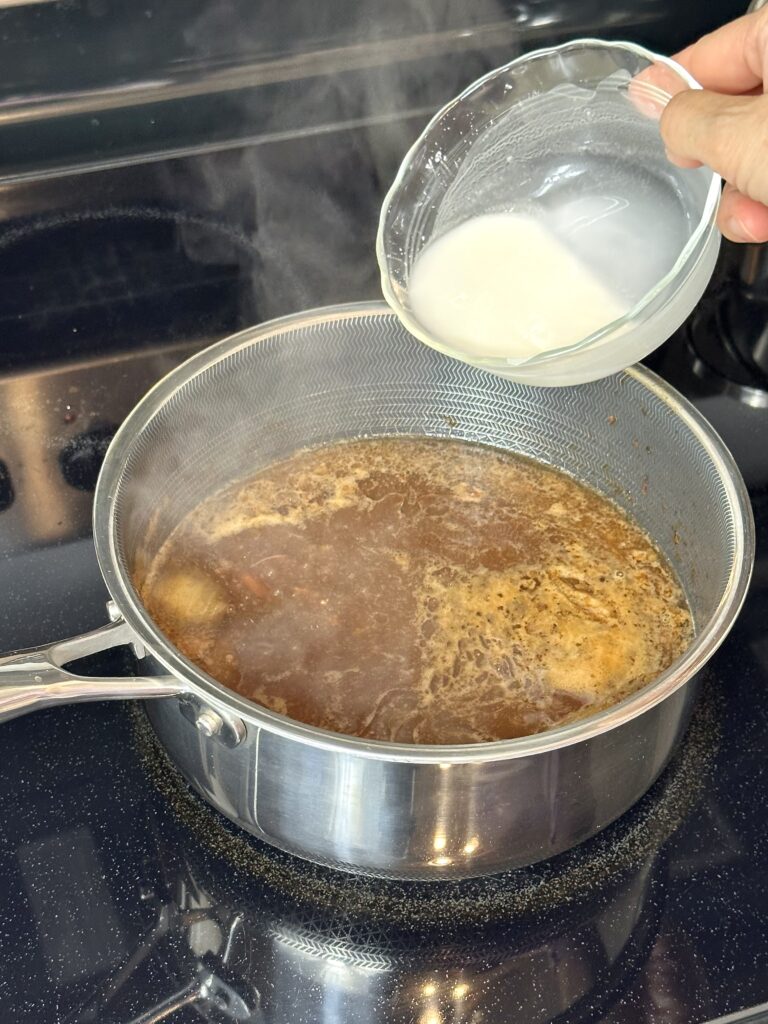
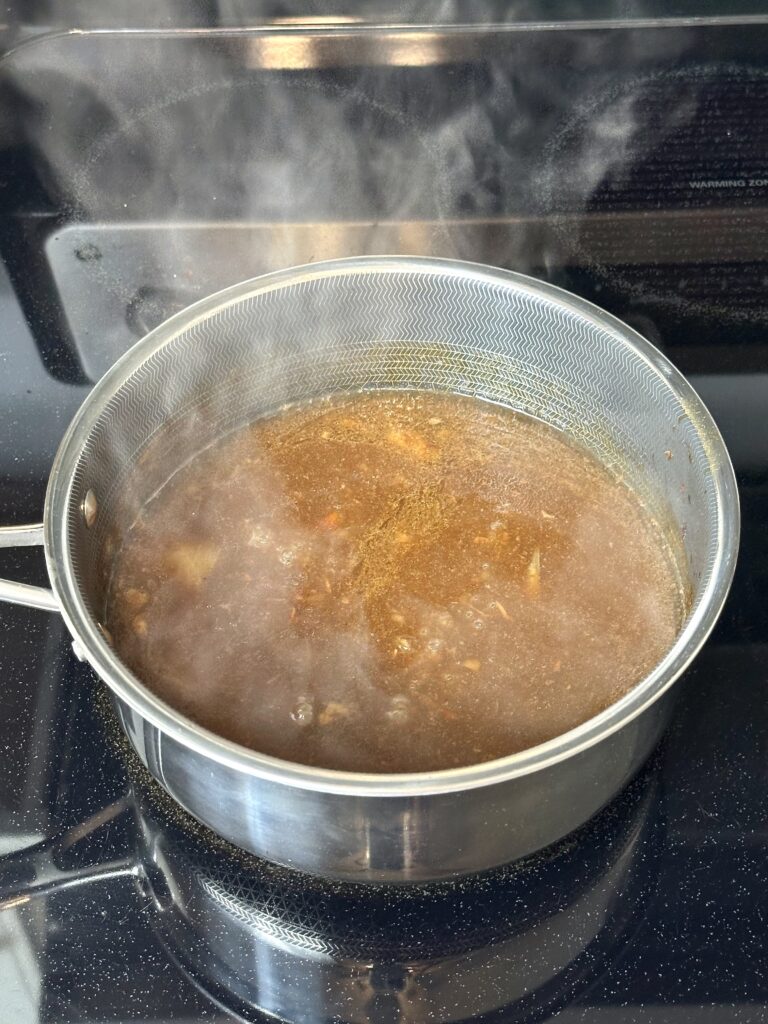
- Thicken gravy (optional): Transfer roast and veggies onto a platter. Pour the gravy into a saucepan on the stovetop. Bring to a boil. Combine cornstarch and water for the slurry. Add to the pan, stirring until boiling and thickened.
- Serve pot roast with gravy.
- Detailed instructions are in the recipe card below.
View the how-to video or save it for later with this Pinterest Pin.
Is searing the roast necessary?
As mentioned earlier, it’s not necessary but recommended. If you don’t have time, skip it. Just season the roast with salt and pepper, then place it in the slow cooker. Skipping the searing means you won’t have the deglazed pan drippings to amp up the flavor of the gravy. But I guarantee there’s plenty of flavor already.
How to tell when the roast is done?
The meat is done when it’s tender and shreds easily with a fork or when the internal temperature reaches 195° – 205° F. If you don’t have an instant-read thermometer, use visual and physical cues. Tough meat indicates it is not fully cooked. Continue cooking and check for doneness (do so quickly).
That said, there’s a slight chance the meat is tough because it’s overcooked. To avoid this, check for doneness at the lowest end of the cooking time and/or use a thermometer.
How to quickly start the pot roast in the morning:
Workday mornings are crazy enough without having to start dinner. But sometimes, a little extra effort in the morning has a big payoff at the end of the day. That’s where planning ahead makes it all possible. Here are some time-saving tips:
- Wash, scrub, and cut the vegetables the night before. Don’t peel the carrots and potatoes. Use baby potatoes to eliminate the need to peel or cut into chunks.
- Skip the searing of the roast entirely. The pot roast will turn out flavorful and fantastic. Searing gives it more color and depth of flavor and helps to better seal in the juices.
- The USDA cautions against partially cooking meat and finishing it later, but many slow-cooking enthusiasts recommend searing the meat the night before as a time saver. I haven’t done that myself, preferring to skip the searing altogether. It’s your roast and your call.
- Prep everything and place it in the slow cooker pot the night before, then refrigerate. In the morning, simply place the pot in the slow cooker base and turn it on. The only caution I have about this method is that the chilled pot and contents will extend the cooking time. If you don’t mind prolonging the cooking time, it’s a great time-saving option. The alternative is to chill the components in containers and throw everything into the slow cooker in the morning.
Add-ons and substitutions:
Rosemary and thyme are widely used in pot roast. Fresh or dried is fine. This recipe is perfect without them, but feel free to toss some in.
If you’re searing the roast, you can substitute red wine for water to deglaze the pan. This substitution helps build the layers of flavor.
Adding a couple of stalks of chopped celery would further enhance the depth of flavor. To further change things up, try swapping out one or two veggies: rutabaga, parsnips, or sweet potatoes are good substitutes.
I prefer to leave out the potatoes and serve mashed potatoes on the side because I can’t resist mashed potatoes and gravy!
How to store:
Leftover pot roast can be stored in an airtight container for 3-4 days. It can be frozen, stored in freezer bags or an airtight container for up to 3 months. Defrost overnight in the refrigerator before reheating.
You Might Also Like:
 Easy Pork Roast with Vegetables
 Chuck Steak Roast
 Beef and Gnocchi Stew
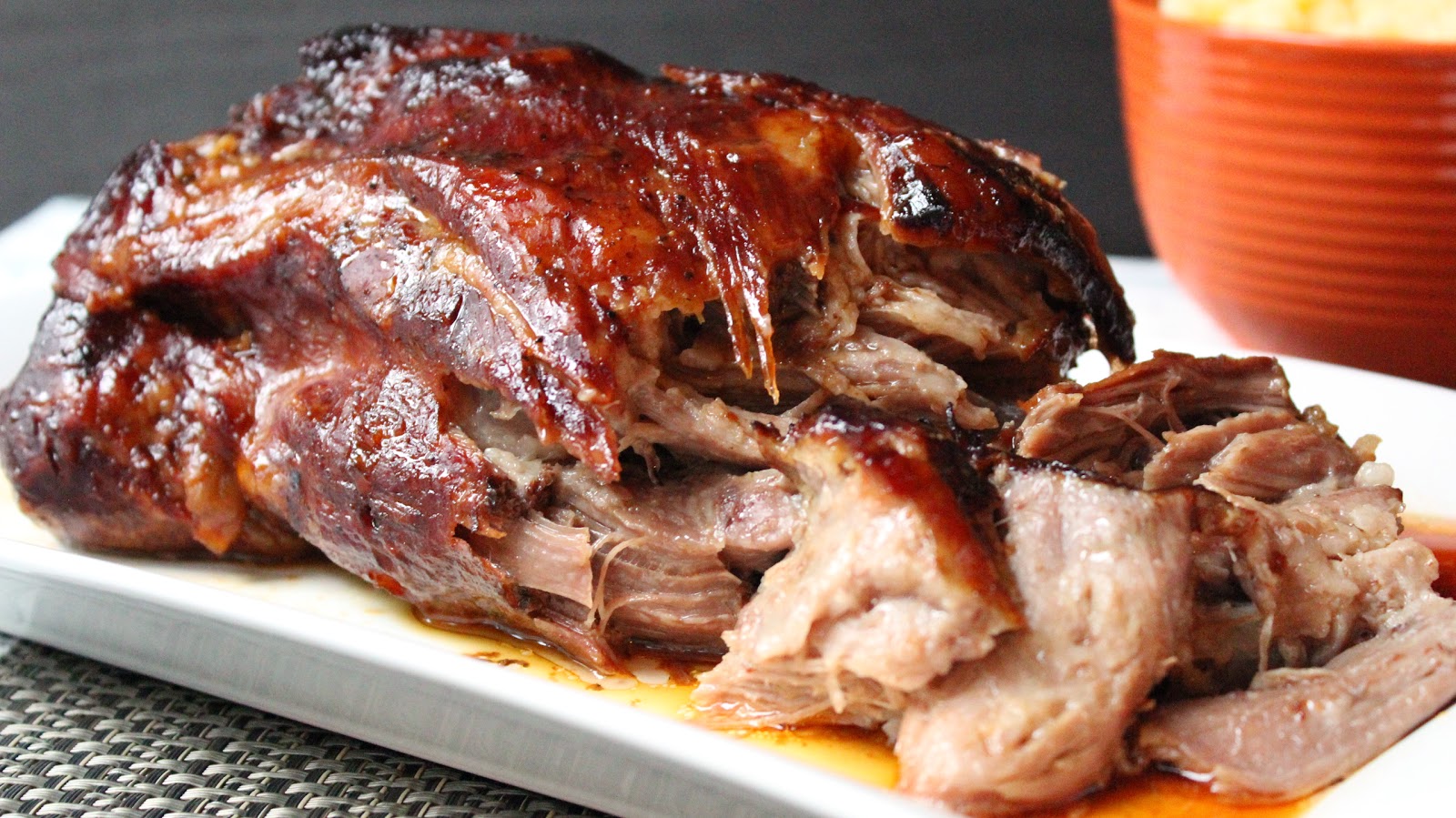 Slow Roasted BBQ Pork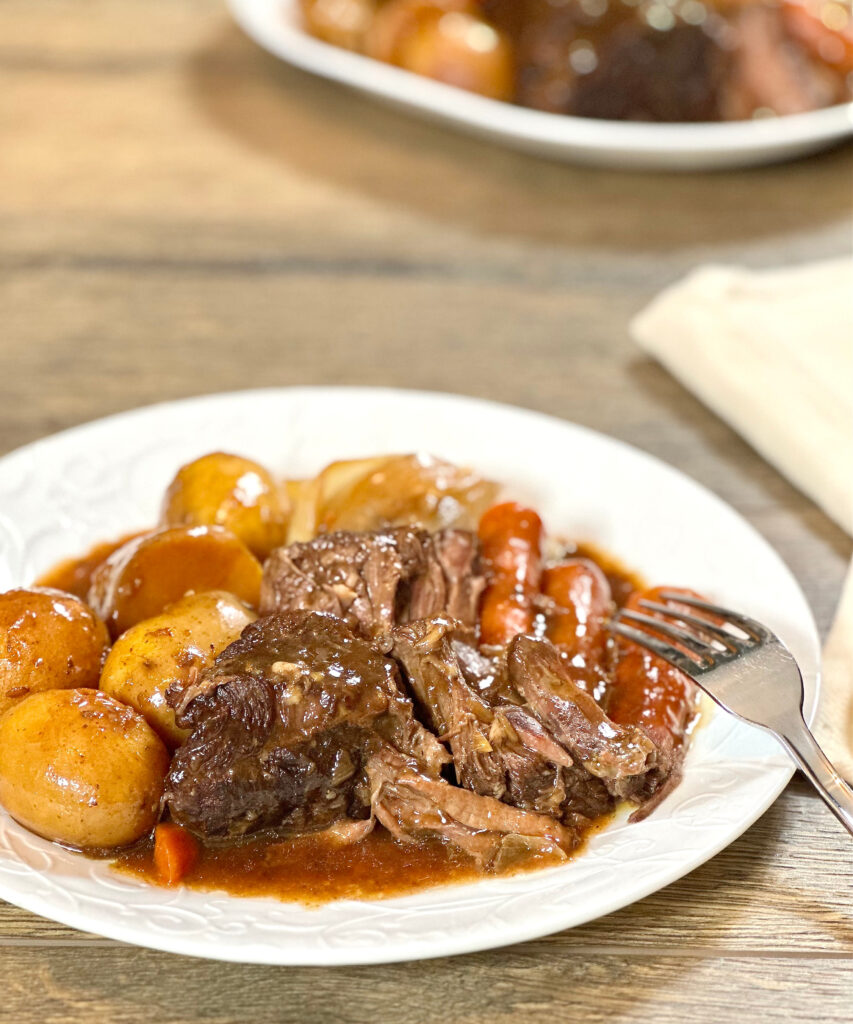

Slow Cooker Pot Roast
Description
This Slow Cooker Pot Roast transforms tough yet economical chuck roast into a fork-tender, juicy meal. It’s slow-cooked with carrots, onions, and potatoes. Seasoning packets are used to create an easy, most flavorful brown gravy.
Ingredients
Special equipment:
Instructions
- Prepare gravy base: Add both au jus packets, 1 1/2 packets of the onion mix, and chopped garlic to 1 3/4 cups of water. Whisk. Set aside. Reserve the remaining half of the onion packet for another use.
- Sear roast: Preheat a large skillet or sauté pan over medium-high heat. Meanwhile, pat the roast dry with paper towels and season with salt and pepper. Add enough oil to coat the bottom of the skillet and heat until hot. Add the roast and sear on all sides to develop a golden-brown crust, about 2-3 minutes per side. Transfer to the slow cooker.
- Deglaze skillet: Reduce skillet heat to medium. Add the remaining 1/2 cup of water to deglaze the skillet, scraping the bottom to loosen the brown bits. Pour the contents into the slow cooker. (See Note ** below if skipping the searing of the roast.)
- Fill the slow cooker: Place vegetables around the roast. Pour in the seasoned liquid.
- Slow cook: Cook on low for 8 to 10 hours or on high for 4 to 6 hours, or until the meat is fork-tender. Check for doneness at the 8-hour mark on low and the 4-hour mark on high. Done when the meat shreds easily with a fork. If your slow cooker tends to cook on the fast side, do your first doneness check earlier than suggested.
- Skim off fat: Use a large spoon to skim (and discard) the fat off the top.
- Remove the roast and veggies (keep covered). Crank the slow cooker on to high (covered) and bring to a boil. Or, for a faster method, transfer the liquid into a pan on the stovetop and bring it to a boil.
- Combine and whisk cornstarch and water to make a slurry. Stir into the gravy, stirring until it begins to thicken. Serve poured over roast and vegetables.
- Makes 6 servings.
Thicken gravy (optional):
Notes:
- * Leave small baby potatoes whole. Cut larger potatoes. They are best kept under 2 inches thick all around.
- ** Searing the roast seals in the juices and adds flavor. This step is optional but recommended. If skipping this step, pat the roast dry and season it with salt and pepper. Skip the searing and deglazing. Place the roast in the slow cooker and continue as instructed.
- Cook on a low setting if at all possible. Low-and-slow cooking is the secret to tender, fall-apart meat. Cooking on high may not produce the same tender results.
Disclosure: This site contains paid advertising and affiliate links. In Good Flavor is a participant in the Amazon Services LLC Associates Program, an affiliate advertising program designed to provide a means for sites to earn advertising fees by advertising and linking to Amazon.com.



There’s nothing like putting a chuck roast into a slow cooker on weekend morning, letting the smell fill up the house, and enjoying a great dinner with little effort.
Thanks for the inspiration.
Happy Holidays to you.
Velva
I think it makes the house feel extra homey and aroma is hard to beat. Happy Holidays to you too, Velva!!
One of my favorite meals. This was a Sunday dinner when I was growing up. I hope you and your family have a wonderful Christmas.
It’s a meal that says home. Wishing you a Merry Christmas and a Happy New Year, Karen!